Silicone vs Acrylic Adhesive in High-Temperature Tapes
Two adhesive families, two different jobs
Almost every tape decision in a hot process comes down to one question: silicone or acrylic? The two are chosen for different reasons, and swapping one for the other is the most common cause of a masking failure that only shows up after the part has been through the oven.
The four points that separate them
- Temperature — silicone adhesives keep their holding power through the sort of heat that degrades acrylic, which is why high-temperature masking is a silicone job.
- Initial tack — acrylic usually grabs faster on a cold surface straight off the roll. On a clean, cool part that can be an advantage.
- Holding power and shear — acrylic builds bond strength over time and holds well under steady load at moderate temperature.
- Cost — silicone is the more expensive system. Choosing acrylic where it would work is legitimate cost engineering; choosing acrylic where it will not is a quality problem waiting to happen.
When silicone is the only sensible choice
Once a process runs above roughly 150°C for any length of time, or the tape has to come off a masked surface without leaving residue, silicone is normally the answer. Green PET masking tape for powder coating, polyimide tape for PCB masking through reflow, and glass cloth tape for oven and heater work all fall into that group.
When acrylic is enough
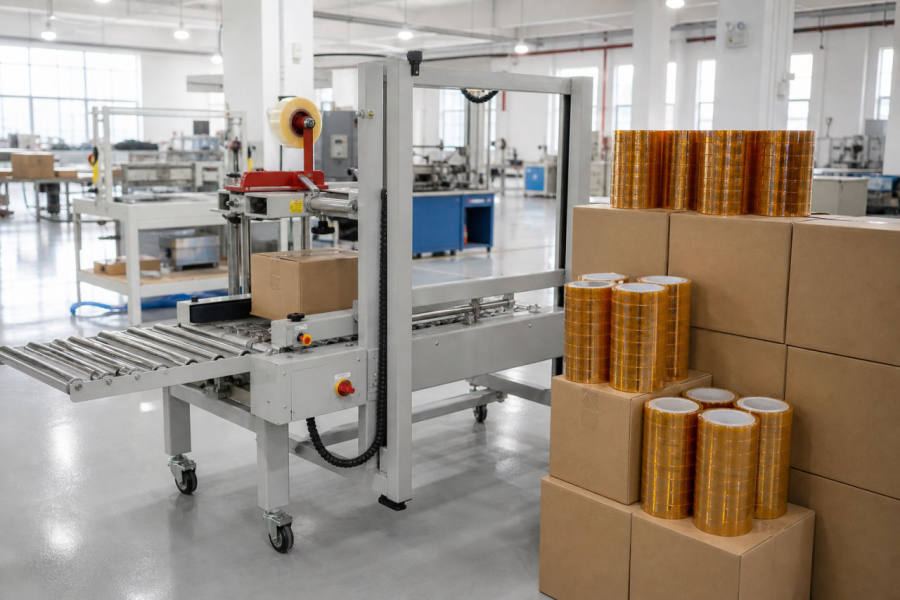
Carton sealing, bag sealing and many general bonding jobs do not get hot at all. Clear BOPP packing tape with acrylic adhesive and double-sided PE/PVC tape are built for exactly those jobs and are cheaper to run.
How the wrong choice fails
- Acrylic pushed past its limit typically leaves a residue that has to be cleaned off before the next process step.
- Silicone specified on a low-energy, cold surface can fail to stick in the first place, which looks like a tape fault but is a specification mismatch.