Flannel Cloth Tape for Automotive Wire Harness
Inside a vehicle, a wire harness has to survive vibration, chafing, heat and constant movement — and it has to do it quietly. Flannel cloth tape is specified for exactly that combination, which is why it appears throughout engine bay and cabin harnesses.
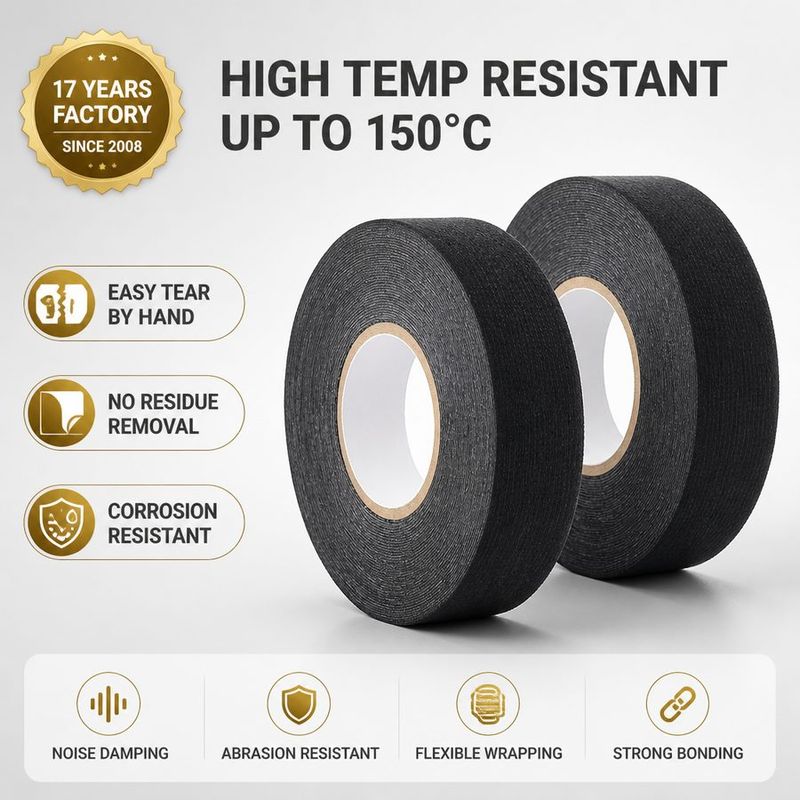
Where it is used
- Harness wrapping — bundling and protecting wire runs through the body and engine bay.
- Rattle and squeak suppression — the fabric surface damps the contact noise that plastic-backed tapes actually make worse.
- Abrasion protection — a soft outer layer where the harness rubs against body panels or passes through grommets.
- Interior and cabin wiring — where a quiet finish matters as much as the protection.
Why flannel rather than a smooth backing
A smooth plastic-backed tape slides against adjacent surfaces and generates noise as the vehicle moves; a fabric backing absorbs that contact instead. Flannel also conforms around tight bends and branch points, so it stays put on a complex harness rather than lifting at the curves.
Full wrap or partial wrap
A full wrap gives maximum abrasion and noise protection but adds bulk and cost. A partial or spiral wrap uses less tape and keeps the harness flexible, which matters where the run has to bend through a tight route. Many harnesses use both — full wrap where there is contact, spiral where there is not.
Specifying it
Tell us the harness section, the ambient and engine-bay temperatures, whether the wrap is full or spiral, and the tape width the winding machine takes. Width and roll length are converted to order, and adhesive choice follows from the temperature and the surfaces involved. The standard construction is on the flannel cloth tape product page.